
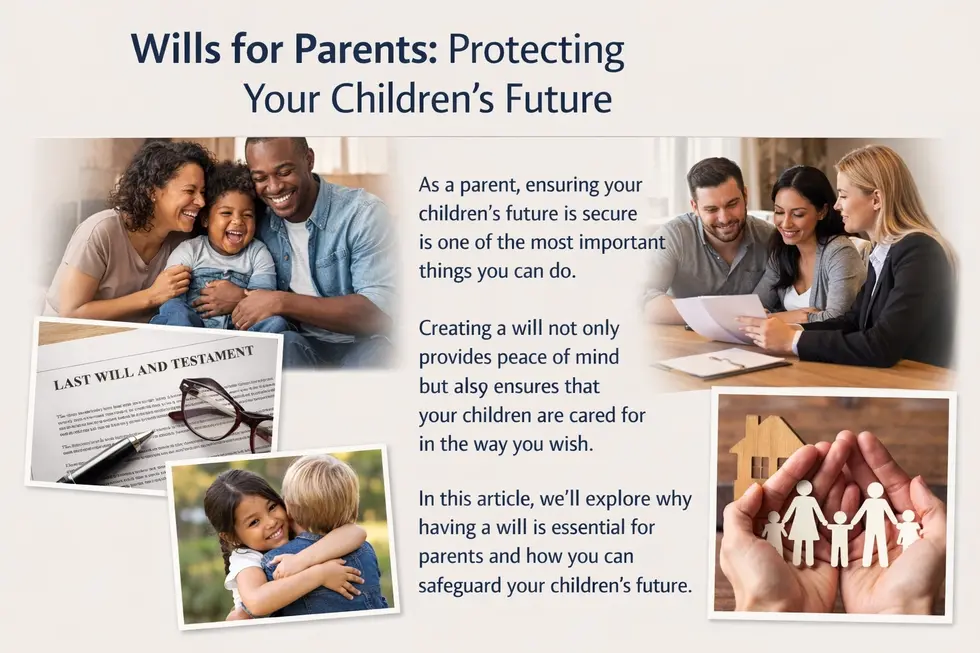
As a parent, your primary instinct is protection. From the moment you bring a child home, your life becomes a series of calculations designed to ensure their safety, health, and happiness. You research the best car seats, scout the top-rated schools, and perhaps even start a savings account for their university education. However, many parents overlook the single most important document in their protective arsenal: a legally sound Will.
While it is uncomfortable to imagine a future where you are not there to guide your children, failing to plan for that possibility is a risk no parent should take. Estate planning is not merely about distributing assets; for parents of minor children, it is about maintaining control over who raises your children and how they are supported financially. At Gonsalves-Sabola Chambers, we understand the emotional weight of these decisions. Our team, led by M. Margaret Gonsalves-Sabola, works with compassion and diligence to ensure that your children's future remains in the hands of those you trust most.
The Vital Role of Guardianship Nominations
The most critical component of a Will for any parent is the appointment of a legal guardian. This is the individual who will have physical custody and the responsibility for rearing your children if both parents should pass away before the children reach the age of majority.
In the absence of a Will, you leave this decision entirely to the discretion of the court. While the Bahamian judicial system operates on the principle of the "best interests of the child," a judge is a stranger to your family dynamics. Without your written guidance, the court must make a determination based on limited information, which can lead to several undesirable outcomes:

- Family Conflict: If multiple family members: such as both sets of grandparents or different siblings: believe they are the best fit to raise your children, a lack of clarity in a Will can spark a bitter, public, and expensive legal battle.
- Unintended Placements: The court might appoint a relative who is legally "next of kin" but whose lifestyle, values, or religious beliefs do not align with how you wish your children to be raised.
- Temporary Foster Care: If no immediate guardian is identified, children may temporarily be placed in the care of social services while the court investigates potential permanent placements, adding unnecessary trauma to an already devastating situation.
By naming a guardian in your Will, you provide the court with a clear mandate. While the court still technically confirms the appointment, your preference carries significant weight and usually prevents any ambiguity or family disputes.
Protecting Financial Security Through Testamentary Trusts
Beyond physical care, a parent must consider the financial management of their children's inheritance. Under Bahamian law, minor children (those under the age of 18) cannot legally own or manage significant property or cash in their own names.
If you die intestate (without a Will) or if your Will simply leaves assets "to my children" without further structure, those assets will typically be managed by a court-appointed guardian or the Public Trustee until the child turns 18. This presents two major risks:
1. Lack of Control Over Usage
A court-appointed manager may be restricted in how they can use the funds. They may need to petition the court for every major expense, such as private school tuition or specialized medical care, leading to delays and legal fees that deplete the inheritance.
2. The "Age 18" Problem
When a child turns 18, they gain full legal control over their inheritance. Most parents agree that an 18-year-old may not have the financial maturity to manage a significant sum of money, a family home, or an investment portfolio.
The solution is the creation of a Testamentary Trust within your Will. This allows you to appoint a Trustee: someone you trust to manage money wisely: to oversee the assets for your children's benefit.

Customizing Your Testamentary Trust
A Testamentary Trust offers a level of flexibility that standard inheritance laws cannot provide. When drafting your Will with Gonsalves-Sabola Chambers, you can tailor the trust to meet your family's specific needs. We often recommend a "staggered distribution" approach, which might look like this:
- Maintenance and Education: The Trustee is authorized to use trust funds at their discretion for the children's health, education, and general welfare until they reach a certain age.
- Initial Distribution: The child receives a percentage of the principal (e.g., 25%) at age 21, perhaps to help with university costs or a first home.
- Second Distribution: The child receives another portion (e.g., 25%) at age 25.
- Final Distribution: The remaining balance is handed over at age 30, once the child has ideally gained professional and financial stability.
This structure ensures that the inheritance serves as a foundation for their life rather than a potential distraction or a resource that is quickly exhausted.
Essential Steps for Parents: A Sequential Approach
When you sit down to plan your estate, it is helpful to organize your thoughts into a logical sequence. This ensures no detail is overlooked and helps alleviate the feeling of being overwhelmed.
First: Select Your Guardian and an Alternate.
Choose someone who shares your values and has the physical and financial stamina to raise children. Always name an alternate in case your first choice is unable to serve. Discuss this with them beforehand to ensure they are willing to take on the responsibility.
Second: Choose Your Trustee.
The person who raises your children (the Guardian) does not necessarily have to be the person who manages the money (the Trustee). In fact, splitting these roles can provide a system of checks and balances. The Trustee should be someone with financial literacy and integrity.

Third: Inventory Your Assets and Life Insurance.
Ensure your life insurance policies are coordinated with your Will. It is often beneficial to name your "Estate" or a "Testamentary Trust" as the beneficiary of life insurance policies rather than naming minor children directly, as this allows the Trust to manage the payout.
Fourth: Address Incapacity.
Estate planning isn't just about death; it is about what happens if you are alive but unable to make decisions. You should have a Power of Attorney and a Healthcare Directive in place to ensure that your financial and medical affairs are handled by someone you trust, which in turn protects the stability of your children's lives.
The Emotional and Financial Costs of Dying Intestate
In The Bahamas, dying without a Will (intestacy) subjects your estate to the Inheritance Act. While these laws provide a default distribution, they are rigid. They do not account for the specific needs of a child with a disability, they do not allow for staggered distributions, and they do not allow you to choose who will handle the administration of your estate.
The financial cost of intestacy is often higher than the cost of drafting a professional Will. The legal fees associated with court applications for guardianship and the administration of an intestate estate can be significant. More importantly, the emotional cost of uncertainty and potential family disputes during a time of mourning is a burden no parent wants to leave behind.
Why Professional Guidance Matters
Drafting a Will for parents requires more than just filling out a template. It requires a deep understanding of Wills, Estates, and Trusts law in The Bahamas and a compassionate approach to sensitive family issues. At Gonsalves-Sabola Chambers, we pride ourselves on the meticulous attention to detail we bring to every client's file.
We know that talking about your children's future without you is difficult. That is why we provide a supportive environment where you can voice your concerns and receive expert advice on how to structure your estate to provide maximum protection. Whether you are a new parent, part of a blended family, or an international investor with assets in The Bahamas, our goal is to give you peace of mind.
Take the Next Step in Protecting Your Family
Your children are your greatest legacy. Protecting them is a lifelong commitment that must extend into the future. By creating a comprehensive Will, you are ensuring that your wishes are respected, your assets are preserved, and most importantly, your children are cared for by the people you love.
Do not leave your children's future to chance or to the default rules of the court. Contact Gonsalves-Sabola Chambers today to schedule a consultation. Let us help you build a secure foundation for the people who matter most.

Comments
There are no comments for this post. Be the first and Add your Comment below.
Leave a Comment